
Last updated 20 November 1999.
Anyone can hang a piece, but a good blunder requires thought. There is one sort of move that is almost always played after calm, if not happy contemplation: resigning. Sometimes it is wrong to resign – or to agree to a draw. Recently in Dos Hermanas, Svidler took a draw against Anand when he had a forced win. Kasparov made both blunders within a few months in 1997, first resigning a game against Deep Blue that he could have drawn, then taking a draw against Lautier in a position that he could have won.
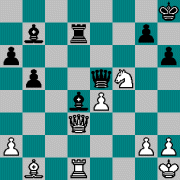
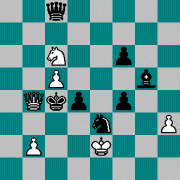
But those are blunders that only cost half a point – the ultimate blunder is when a player resigns in a winning position. It happens more often than you might think; in my ramblings through chess literature I have come across 35 examples. Click here to go to the first, and then click the diagrams to go to the next one.